

Sourdough Starter Troubleshooting Guide and FAQ
Basics + FAQ Maintenance Baking Troubleshooting
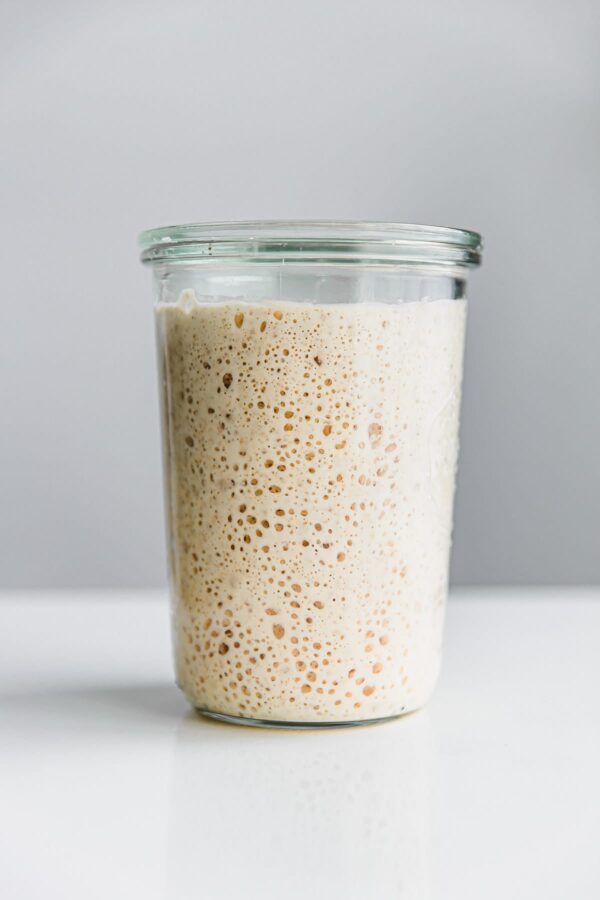
Many people are creating sourdough starters and exploring sourdough for the first time. It’s exciting to see people diving into a subject that I’m so passionate about!
Over the past month, I’ve received many questions on sourdough starters. To create a helpful and easily referenced resource, I’ve put together an extensive Sourdough Starter Troubleshooting Guide below.
If you’ve already established a strong sourdough starter and are experiencing troubleshooting issues related to bread baking, please check out my Sourdough Bread Troubleshooting Guide.
Here you’ll find answers to the following questions and much more:
- How do I get started?
- How can I reduce sourdough discard and waste?
- What flour should I feed my starter? What is a feeding ratio?
- Why isn’t my starter more active? Should I start over? When can I start baking with it?
Note: If you have additional questions not addressed, please leave them in the comment section.
Skip to Various Sections:
Basics + FAQ Maintenance Baking Troubleshooting
Sourdough Starter FAQ:
Q: How do I get started?
A sourdough starter is a culture of naturally occurring wild yeast and lactic acid bacteria used to make naturally leavened, fermented bread. Sourdough starters are active organisms that require regular feedings for best results.
If you’re new to sourdough baking and interested in creating a starter from scratch, I recommend checking out this list of my favorite sourdough resources and tools before getting started.
While I don’t have a sourdough starter recipe, I recommend The Perfect Loaf’s starter guide or Baker Bettie’s starter guide. Be patient as it can take up at least 2 weeks (or longer) to build an active, strong sourdough starter ready for bread baking.
Q: Do I really need a kitchen scale?
Yes. This is less of a deal-breaker for creating a starter, but vital for bread baking if you’re looking to achieve consistent results.
Volume measurements are wildly inaccurate (on that note, be sure to learn how to measure flour properly!) and will not yield consistent results for sourdough baking. I recommend this basic scale, but any accurate scale with 1-gram increments will work.
Q: Where are your starter jars from?
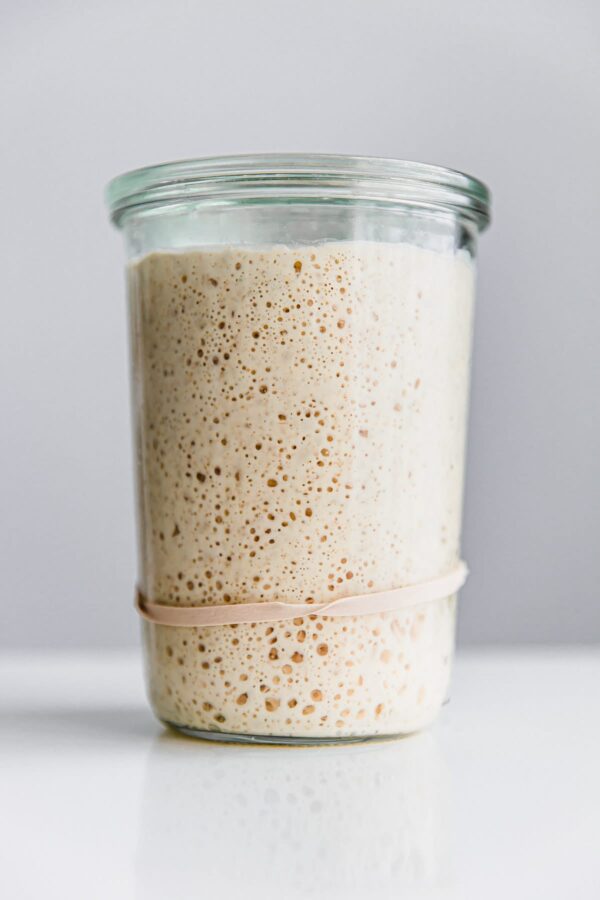
I’ve found Weck jars to be perfect because they’re straight-sided. This makes them easy to clean and offers a visual clue as to your starter’s activity level.
If you would prefer to use something else, choose a container that meets the following criteria: 1) easy-to-clean, 2) glass, 3) includes a lid, which can be set askew or is not airtight, 4) is appropriately sized and allows your starter to grow at least 3-4x in volume.
Q: Do I have to discard sourdough starter? How can I reduce flour waste?
Yes! Discarding part of the starter is required to maintain a healthy sourdough starter. This actually reduces waste, as it means your starter remains small and requires less flour during feedings. Also, please remember that homemade bread is less wasteful and less resource-intensive than packaged store-bought bread.
When I’m not baking bread, I scale down my starter. If I do plan on making bread, I simply scale it up during the previous night’s feeding (same feeding ratios, just larger quantities) before preparing sourdough bread or sourdough pizza dough the next morning. Please remember that you can always scale a starter up or down; the volume of your starter does not have an impact on its strength.
The best way to reduce the amount of sourdough discard during each feeding is to maintain a small starter or use the discard in sourdough discard recipes or for bread baking. You can also compost discard or gift dry sourdough starter to friends.
Note: If you want to use the discard, but don’t want to bake every day, you can compile the discard into one jar at each feeding and store this in the refrigerator. You’ll need to bring it back to room temperature (wake it up!) or give it additional feedings, depending on what you are using it for.
Q: Why do some starter guides call for different types of flours?
Methods will vary depending on a baker’s preference and experience. While you can make a sourdough starter with many flour types (do not use bleached flour for any bread baking), whole grain flours will generally yield faster results.
Rye flour is one of the best, as it is higher in nutrients than other whole grain flours. Extra nutrients will often speed up the process. If you don’t have access to rye flour, organic whole wheat flour is the next best option. Most starter guides will transition flour types and instruct you to change feeding ratios as it builds strength.
Whole grain flours contain the germ and endosperm, which become rancid if stored for extended periods at room temperature. Make sure your flour isn’t spoiled before starting.
Q: What kind of flour should I feed my starter?
Sourdough starters can be made and maintained with many different types of flours. All sourdough starters will behave differently, but different flours will yield different characteristics and flavor profiles.
Once your starter is active, I generally recommend feeding it with the type of flour that you will most often bake with. Therefore, if you’re making mostly whole grain bread, you might want to maintain a whole wheat (or predominantly whole grain) starter.
If you plan on baking with bread flour, you might want to slowly transition it to bread flour or unbleached all purpose flour over time. See more on transitioning to different flour types below.
Q: Can I make a gluten free sourdough starter?
Yes, this is possible! Gluten free starters behave extremely differently and require a completely different baking approach. There are various flour options you can try, so you’ll need to do more research to figure out what is best for you.
I am not experienced with gluten-free sourdough baking, but there are great resources (Vanilla and Bean, as well as King Arthur Flour) out there if you’re interested.
Q: Can I use packaged yeast in my starter?
No! Sourdough starters are cultures of wild yeast/lactic acid bacteria. You cannot jumpstart or create an a sourdough starter from commercial or dried yeast. It sort of defeats the point.
Q: What is a 100% hydration starter? What does that mean?
Hydration refers to water (or other liquids) quantity relative to total weight (grams) of flour. A 100% hydration sourdough starter is fed and maintained with equal parts flour and water by weight. Most sourdough bread recipes call for and use this type of starter.
Starter Maintenance Questions;
Q: Can I switch or transition flour types over time?
If your starter is brand new, I don’t recommend constantly switching your flours (type or brand) as this will impact its activity and can create confusion if you’re looking to establish a solid feeding schedule.
However, if your starter is active and mature, you can change flour type as desired or needed. I recommend transitioning the flours slowly over the course of a week. Remember that flours behave differently and you may need to adjust your feeding schedule.
Q: How do I scale my starter up or down for baking or other reasons?
Simple increase or decrease the quantities in your next feeding using the same feeding ratio (see explanation below) to maintain your current schedule. Example:
Current Starter Feeding: 20 grams starter: 100 grams flour: 100 grams water (1:5:5 ratio)
Scaled Down Starter: 5 grams starter: 25 grams flour: 25 grams water (1:5:5 ratio)
Scaled Up Starter: 40 grams starter: 200 grams flour: 200 grams water (1:5:5 ratio)
Q: Can I preserve my sourdough starter in case something happens? What’s the best way to gift it to other people?
For long term storage, I recommend keeping dried sourdough starter on hand. Follow this guide on how to dry sourdough starter. Great for an emergency back-up or for gifting to friends and family.
Q: Can I refrigerate my starter if I don’t bake frequently?
Yes. If you don’t bake frequently or are going out of town, you can refrigerate a healthy sourdough starter for long period of time. Cold temperatures slow yeast and bacteria activity and will naturally extend how long your starter can sit between feedings.
I don’t recommend continuous refrigeration as it can change the balance of wild yeast/lactic acid bacteria and yield inconsistent results. However, it’s a great option for short-term breaks!
Before refrigerating your sourdough starter, discard a portion and give it a regular feeding. Allow the mixture to sit at room temperature for roughly 1 hour before transferring it to the fridge.
Once you are ready to resume regular feedings or bake with your starter, remove it from the refrigerator and allow it to sit at room temperature (ideally between 74°F-78°F) until it is bubbly and has reached peak activity. Continue with regular feedings and observe its activity.
Depending on how long it has been refrigerated, a refrigerated sourdough starter may require an additional 2 to 3 regular feedings at room temperature before it has resumed regular activity levels and is strong enough for baking sourdough bread or sourdough pizza.
Q: What do you mean by feeding ratio? Which feeding ratio should I use?
Feeding ratios are used to indicate the ratio of sourdough starter, flour, and water in each feeding. Here are a few examples:
1:1:1 ratio = equal amounts of sourdough starter, total flour, and total water by weight. [Eg. 20 grams sourdough starter: 20 grams flour: 20 grams water].
1:2:2 ratio = [Eg. 20 grams sourdough starter: 40 grams flour: 40 grams water]
1:5:5 ratio [Eg. 20 grams sourdough starter: 100 grams flour: 100 grams water]
*Most sourdough starter guides begin with a 1:1:1 ratio. As your starter becomes more active (more wild yeast/lactic acid bacteria), you will change your feeding ratio to account for the increased activity level.
Once your starter is active and on a reliable feeding schedule, you can adapt your feeding ratio as needed to adjust baking timelines, etc.
Sourdough Starter Baking Questions
Q: How do I know when my starter is ready for bread baking?
Before baking, your sourdough starter should rise predictably and be on a reliable, consistent feeding schedule. If your starter is struggling to rise between feedings or taking a significantly long period to reach peak activity, it is most likely not strong enough to leaven bread.
This might vary depending on the type of flour you’re using, but your starter should at least double in volume (or more) at peak activity and pass the float test.
My current feeding and starter activity: My two-year-old starter is currently fed King Arthur unbleached bread flour. Using a 1:5:5 ratio, my starter peaks in about 10-12 hours when held at a temperature of roughly 75F.
Q: Do I have to use my starter at peak activity? Can it be used early or late?
Once your starter is active, you can play with these elements to introduce different flavor profiles into your bread. Younger starters will have a more delicate, sweet flavor. Peaked, slightly fallen starters are higher in acetic acid and will contribute more sourness/tanginess to your loaf.
I prefer to use my sourdough starter at peak activity and when it is just beginning to fall, as this has yielded the best results for me. Remember that changing these variables will impact your dough and bulk fermentation times.
Sourdough Starter Troubleshooting
Q: My starter is developing mold. How do I know if my sourdough starter is bad?
If your starter is developing any mold (pink, etc.), throw it out immediately. There is no way to fix or salvage a moldy starter. Check your flours (are they rancid? spoiling?) before starting over.
Q: My starter isn’t showing any signs of activity and it has been several days. Did I kill my sourdough starter?
Be patient and try placing it in a warmer area of your home (76F-80F is ideal). Use your nose as a guide, as it a better tool than visual activity in the beginning. Use recipes as guidelines, not strict timelines. If your starter peaks in activity, feed it. If it sluggish, wait and give it more time.
Many guides indicate that your sourdough starter should be active and ready for baking within less than a week. This is best case scenario and is not common. Many starters take up to 2 weeks or longer to become active enough to use in bread.
Q: My starter was really active on day 2 and 3, and then there was zero activity. What is happening?
It is common for a sourdough starter to have a surge in activity those first few days and then die down. This is normal and the results of another type of bacteria build up, not an indication that your starter is dead.
It will pick up again with time and the right types of bacteria (wild yeast/lactic acid) will increase and become more stable.
Q: My starter is active, but is barely rising between feedings. What do I do?
Stay the course, be patient, and continue with regular feedings until it strengthens. If you’re using a smaller ratio of sourdough starter in your feedings, consider increasing it until the starter gains more strength.
If your starter is not doubling or growing substantially in volume between feedings, it is not strong enough to leaven dough. You can certainly try baking, but you most likely will not achieve proper fermentation.
Q: Why isn’t my starter passing the float test?
Float tests are not fool-proof, but are generally reliable for 100% hydration sourdough starters (starters that are fed equal portions of flour and water). Failed float tests generally indicate the following:
- Your sourdough starter is too young and not strong enough for bread baking.
- The starter is strong and active, but not quite ready. Allow the starter to sit at temperature for another 30 minutes or hour and test again.
Q: My ambient kitchen is very cold. What can I do?
Wild yeast prefers warmer temperatures. If you’re dealing with cooler temperatures, your sourdough starter will take longer to develop, require more time to peak between feedings, and your bulk fermentation time for bread baking will be extended considerably. This isn’t a deal-breaker, but something to be aware of.
You can try storing your starter in an oven with the light on (please use an ambient thermometer to keep an eye on the temperature as some ovens can easily become too hot). You can also try placing your starter container in a microwave next to a warm bowl of water.
If you’re serious about bread baking and struggling with temperature regulation, I highly recommend a bread proofing box (I own this Brod & Taylor one and love it).
If you enjoyed this post, be sure to check out my other sourdough bread baking resources:
178 Comments on “Sourdough Starter Troubleshooting Guide and FAQ”
My starter rose nicely and later in the day deflated. I had a rubber band making the level before it rose… now it’s back to the marked level. That’s about 3/4″. What now?
Hi Kathy, this is normal and what will happen if an active starter runs out of food (and has been sitting for a while after a feeding). Ideally, you want to feed a starter at peak activity (when it rises and levels – but doesn’t fall yet), and repeat.
If your starter is very active, you probably want to change up your feeding ratio accordingly to try to come up with a manageable a daily feed schedule. I cover all of this in this FAQ!
Hi! I have a starter thats just about 7 months old, it has worked wonderfully up until now and produced beautiful loaves. I have made over 80 loaves of bread with this starter as I was selling the bread. However, recently my starter has been very sluggish and not very active. It no longer doubles in 4 hours and has very little bubbles. What do you think is wrong and what should I do? Also, thanks for your site, I have really been enjoying it.
Hi London! Sometimes starters can behave a bit differently in different seasons – I’m guessing your house or environment is colder and that’s why it’s being a bit more sluggish. Mine recently has a bit less active as well, so I decided to go back to adding a bit of rye flour into my normal feedings (80% bread flour, 20% rye flour) and it has picked right back up.
Alternatively, try to find a warmer spot in your kitchen!
Hi Laura,
Wow, thanks for this great resource! I have about a 1 month old starter and followed another bloggers recipe where she never mentions it rising on the counter and I’m realizing I think my starter may not be ready/strong enough yet to bake bread?? It will get bubbly after feeding it, and for a while there was a lot of hooch forming, within an hour sometimes. I have been feeding at a 1:1:1 ratio with whole wheat flour, maybe I should switch to rye? If my starter isn’t ever doubling in size on the counter does that mean it’s not strong enough yet and I should leave it out for awhile and try feeding daily on the counter instead of keeping in the fridge? I’ve tried bagels twice and the dough never rose much once they were formed, and they came out very dense.. other recipes that use the discard have turned out fine, but not much leavening was required for them. Thanks for any tips you may have for me, I am loving venturing into the sourdough baking world!
I started a new sourdough starter from scratch exactly 12 days ago. I used the King Arthur instructions, except I started using all-purpose, unbleached flour. I saw more activity with bubbles the second and third day, and barely anything since. It is not rising at all. It doesn’t smell or taste even slightly acidic. I get a few tiny bubbles. I feed it twice a day. My apartment is around 65-68 degrees. I though this might be too cold, so I would warm my oven just slightly, turn it off, and keep my starter in there so it at least got a few hours of warmth (I don’t have any other consistent heating sources). I was also wondering about maybe keeping it wrapped in a towel in my slow cooker on the “warm” setting. Do I just need to keep being patient? I don’t want to waste my flour and my time. I can’t figure out if I’ve done something wrong.
My starter smell like acetic acid. Is this normal?
Hi, my starter rises to 3x in bout 3 hours. Temperature of my kitchen is about 30 degrees Celsius. I was wondering if this effects the bulk fermentation too (shorter BF) in the case that I leave it to BF in the same temperature?
Absolutely!!! It will have massive impacts on fermentation – it’s going to be hard to control, to be honest, in that high of temperatures. You’ll need to make a lot of tweaks (colder water, less starter, etc) in order to ensure it doesn’t over ferment and it might still be a huge challenge in that environment. I wish I could be more specific, but sourdough is not exact and temperature is a massive variable!
I lightly oiled the bowl before putting my sourdough in to rise. (I do this with yeast breads). Is this a problem?
You can definitely do this! I don’t personally do this and it isn’t necessary, but it is totally up to you!
Hi! I have a question regarding the time my SDS takes to be ripe. Let’s suppose it takes about 8-10 hours for my SDS to reach peak, this means two things: feed again or make levain. Does this mean my levain will take the same time to be ripe and ready to be used ?Meaning I would have like a 2 day preparation for baking?
Also, should I rely more on the float test or on the doubling size of my SDS? I’ve been having trouble noticing when it is perfectly ripe, meaning it has doubled in size and also floats. And how can I now if it is overripe? If I make levain out of a overripe SDS, will this levain work properly?
Sorry for all the questions. Just trying to get it right! Been at it for weeks?
Hi Mariana,
Ideally, yes, when your starter has reached peak activity, it’s time to give it another feeding. That time will vary depending on the feeding ratio you use (amount of starter discard to flour/water), as well as temperature, flour type, and a lot of other factors.
I personally choose not to create off shoot levains for my breads and just use a portion of my sourdough starter in my bread dough. This works with my feeding schedule and bread recipe schedules (see this recipe for more details: https://www.abeautifulplate.com/artisan-sourdough-bread-recipe/). With my method, I would scale up my starter (you’ll need to account for a tiny bit of leftover to maintain your mother starter) the night before and start my dough in the morning/it gets baked up the next day after that.
I would always rely on your sourdough starter and use it at peak activity (this can even be more than doubling, it really varies based on your starter, but double is the minimum that I would look for in a starter to bake with and produce strong leavening). If your starter is strong and doubling/tripling, it will almost always pass the float test, and the float test can be a bit unreliable if you’re using different types of flour in your starter, etc. You can use both tests though to be sure!
You can use a sourdough starter at peak activity or when it’s barely barely starting to fall. If it has fallen completely, that means it has been sitting for a long time and is completely out of food and the acid level has increased. I wouldn’t personally use a completely fallen starter in my bread dough, but you should definitely feed it and you can hold off on baking until you have a better idea of your starter schedule.
Hope this helps! I would check out my other sourdough resource posts, as I have a few that might help clarify these points, along with a YouTube walk through video: https://www.abeautifulplate.com/guides/cooking-technique-guides/homemade-sourdough-resources/
Thanks for your reply Laura, I will try your recipe. I did stay up well after midnight and cooked the loaves I made, they were pretty good afterall (with some oven spring) but they need to rise more. My son was up too and ate half of one before I could get to bed. My starter seems awesome now and so active. (i started with red grapes in all purpose flour then removed after a week then cycled thru 2 doses whole wheat then one dose rye, maintained with APF.. . its a great color)
signed,
DS (that mad scientist)
Have what appears to be perfectly active starter but my dough isn’t rising much. I suspect the recipe had too much flower. Please confirm!! I used this recipe:
INGREDIENTS
For the leaven:
1 tablespoon active sourdough starter
75 grams all-purpose flour or bread flour (1/2 cup)
75 grams water (1/3 cup)
For the dough:
525 grams water (2 1/2 cups), divided
1 tablespoon salt
700 grams all-purpose flour or bread flour (5 1/2 cups). (700 grams flower seems a lot.)
From
https://www.thekitchn.com/how-to-make-sourdough-bread-224367
Thanks!!
Signed,
DS, A mad neuroscientist making anything fermented
Hi Dan, I don’t think the flour quantity sounds crazy (although it is a bit high for a one-loaf recipe). The biggest red flag to me is following any sourdough recipe that includes volume measurements, particularly for sourdough starter. Ideally, you would only use gram measurements for every process of sourdough, otherwise it could be wildly inaccurate. Salt density varies TREMENDOUSLY by brand, so tablespoon measurements for salt could be having a major impact on your bread (depending on what brand and type you use in your kitchen, etc.) just to name one variable, etc. Water should list the temperature and so forth.
Have you tried my sourdough bread recipe? https://www.abeautifulplate.com/artisan-sourdough-bread-recipe/ I would recommend starting there, because I’m much better at troubleshooting issues with my own recipes than those from other sites without a lot more information.
I have made perfect starter in Wyoming but here in Wisconsin I can’t seem to get it active. It is thin and watery with very few bubbles. I have been leaving it out on the counter feeding it everyday. Could it be getting too warm? It has been 5 days.
Does it smell super acidic and almost alcohol like? If so, it is getting too warm. Though, if the starter is only 5 days old (and I understood that part of your comment correctly), that’s a very young starter and you’ll need to give it a lot more time. It took me 2-3 weeks to establish a starter with a predictable rise/fall schedule.
I would feed it once a day max at this stage, and maybe even give it more time between the next feeding.
What a great site you have, definitely excited to start using the starter that my mom gave me in April. I have been feeding it regularly each week and keeping it in the fridge. I would love to try out your pizza dough recipe and my question is the specific sequence of events prior to measuring out the starter for the recipe. Do I take it out of the fridge, feed it, leave it our overnight and then measure? Or do I feed it, leave it out for the usual 2-3 hours to get it active and then measure and use in the recipe? I am always a little unclear as to what constitutes starter vs discard…..thanks in advance for some guidance!
Hi Sarah! Happy to help. By starter, this essentially just means the main starter that you feed regularly. Sometimes it goes by the name levain, etc. Whenever you do any sort of feeding, you discard a portion (hence the name discard), as otherwise your starter will just turn into a monster (in size, etc.). You can literally discard that portion (compost, etc.) or if timed appropriately, use it in your bread/dough recipe.. Some people create what are called “off-shoot levains or starters”, which are essentially separate starter feedings that are used for a recipe. This can be great if you want to experiment with different flours or need more control over baking schedule.
I prefer to simply scale up starter quantity before baking, so the excess portion (essentially the discard) can be used in my dough, as it works with may normal feeding schedule. This is the same concept, but you do need to be mindful of making enough so that you have a portion of starter left to maintain and keep going as your “mother” starter.
When you’re making a naturally leavened baked good, such as my sourdough pizza dough, you would use a portion of starter ideally when it has reached peak activity, ie. it has risen to its full capacity and the natural yeast has run out of food but it hasn’t started to fall yet. I cover this a bit more thoroughly in this guide, so I recommend reading through or brushing up on what that means. In my bread recipes, you’ll always notice that I write “ripe sourdough starter” under ingredients and the word ripe means starter that has reached peak activity.
If you’re simply using sourdough starter to add flavor to a baked good (such as in a pancake or muffin, which normally uses a chemical leavened as well, you can generally get away with using discard at various points in the process).
If you’re storing your starter in the refrigerator, I recommend removing it from the fridge at least 1-2 days before attempting the dough. Allow it come to peak activity, feed, and proceed with another 1-2 normal feedings while keeping it out at room temperature. Starter hibernates in the fridge, so if you haven’t really observed your starter when it’s at room temperature before or have never baked with it, I really recommend doing this, otherwise it is hard to understand what “peak activity” means and none of this will make sense.
You’ll most likely have to scale up the last feeding prior to making the dough (you can keep the ratios of flour, water, and starter the same) as this recipe requires a lot (250 g) of sourdough starter. For me, that usually means the night before I make pizza, my sourdough feeding = 130 grams flour, 130 grams water, and 20-30 grams starter give or take. This gives me enough starter for the dough, while leaving a small quantity for my “mother” starter. Hope this helps clear some things up and doesn’t cause more confusion! I definitely recommend reading through all of my sourdough resources if you have additional questions.
I’ve looked everywhere on the net for what to do when the starter has fallen too much.
I’ve tried using it because I figure that if the starter is hungry, putting it in the autolysed dough will give it food.
What’s wrong with that? It will rise again right? If I leave it in the fridge overnight?
but do I then need to add more autolysed dough to keep it feeding during the bread making process?
Just now I used half of the fallen starter for a ciabatta, then fed the rest. I’ve coil folding the ciabatta dough and hope by the time I finish, the starter will have grown again (it hadn’t fallen completely) and I’ll add more.
Any ideas?
You can definitely use fallen starter in sourdough – ideally, it’s used more at it’s peak activity level, than before it falls, when there’s no more signs of activity, but it hasn’t lost its volume and sank (that usually doesn’t happen for hours after it’s peak activity). A true fallen sourdough starter has been out of food for a long time, and the acid loads can be quite high, which can affect the flavor of the bread, etc. It really depends on what you mean by fallen and for how long.
You also need to reserve/feed a portion of your starter to keep it going. You don’t typically add more starter to a dough, you add it once and you’re done. I’m a bit confused by your questions, so would need more guidance to understand what you mean better!
Thanks Laura,
Well, it was almost at it’s peak, maybe 3/4 more than original volume, when I had to go out, so I put it in the fridge thinking when I come back it will be doubled. Then put some flour and water to autolyse.
When I came back some hours later and took the starter out of the fridge, it had fallen to about quarter of the original volume.
I decided to pour the right percentage into the autolysed dough. It’s been there now for about four hours and I’m doing coil folds every half an hour. It’s not bubbling as it usually is.
In the meantime, I put more flour and water and discarded half the remaining starter. It’s now about 2/3 more than original volumecoil and I’m waiting for it to reach it’s peak to put it into the coild folded dough so I can then put it in the fridge overnight for a long bulk rise.
It’s 10/15pm here so in another half hour or hour the starter will be at it’s peak and I plan to put it in the dough, coild fold maybe once more to mix it in then put it in the fridge.
What do you think?
Usually starters should be doubling in height before you want to use them in your bread dough – obviously this will vary depending on the starter, but it should ideally be doubling (or more) at peak activity. Truthfully, I can’t give you much advice because I’ve never made sourdough the way you’re describing where you’ve added starter twice. Without seeing photos, without seeing a recipe, etc. it’s really impossible for me to troubleshoot. I wish I could be more helpful! I recommend following my recipe next, and then I’d be able to give you better advice: https://www.abeautifulplate.com/artisan-sourdough-bread-recipe/
Thanks anyway Laura.
To be honest I asked only because surely I’m not the first person who has let their starter go too long and it’s fallen. Of course we all want to follow the recipe but some days are hotter than others, some days you go out and miss the peak.
The question is a simple one. do you have to begin the starter all over again from the begining or not? I understand if it’s fallen slightly no problem. Mine had not fallen slightly but a lot.
My thinking is that you can rescue it without waiting four more hours, when probably you want to go to sleep, and that you can add it to the autolysed dough because this feeds the starter in any case.
Thank for doing your best to respond in any case Laura.
If it’s fallen, you can definitely add it to dough, just know it might impact the flavor and timeline if it’s fallen for a significant period of time (if it’s incredibly liquid-y and has hooch on the surface I wouldn’t personally use it in dough until it’s been fed again). That part I feel confident giving an answer on! As for how the dough is behaving, I would say follow the dough’s lead and see how it’s doing versus other bakes.
Thanks Laura,
Actually I made ciabatta with it and it was delicious and the crumb was very good!
I added the fallen starter to the autolysed dough, coil folded it about 8 times waiting for the refed starter to be ready, and it wasn’t ready by the time I wanted to go to bed do I put it in the fridge, with the fed starter.
In the morning the starter was ready and I added it to the dough, waited about two hours, coil folding again and it went all bubbling. then I just baked it and it was yummy.
The thing I don’t know is if I didn’t add the second lot of fed starter, would it still have worked? I guess I can only try it next time!
Hi Laura, may I ask, My starter is just over a month old but it does not ever doubles in size. After feeding it does rise but does not ever doubles in size. Im using all purpose flour. What would you advise? I was thinking of changing the flour, maybe use bread flour but Im scared. Please advise.
Hi! Sorry for the late reply. I would recommend switching to bread flour and/or (preferably) a combination of bread flour and rye flour (the whole grains can help strengthen a weak starter!) – perhaps an 80/20 mix by weight. Give it a few days, as it will take a bit to see some changes, but it should start to improve!
Also, be sure to do regular feedings! There could be other reasons why it’s struggling along, but it sounds fairly young to begin with and that it needs a little boost with these tips. Hope this helps!
Hello!
I have just found your post and it is really helpful. I have a 4 year old starter which I may have neglected fairly recently and I am trying to revive it and it just isn’t bouncing back like it usually does. There are signs that it is still active. Small bubbles on the surface and when I stir it you can see structure from bubbles underneath. It also smells fine. It just isn’t rising at all. I have given it about a week now of daily/ twice daily feedings. Any suggestions? Thanks!
Hi Lucy! Does the texture feel like it did when it was very active? Just trying to check a possible issue, but I definitely would NOT throw it out. I would give it another few days, and if it’s still acting slow add some rye flour as a part of your feeding blend (I would do about 80% unbleached bread/AP and 20% rye) and that might help kickstart things. Keep me posted!
Hi Laura,
Thanks for getting back to me!
It is potentially ever so slightly more elastic in texture than it was. It also now smells sweeter than it did, although not unpleasant. I have been keeping up with the twice daily feeding and there are still signs it is active but it isn’t getting any better. This morning I added a small amount of rye flour to the feed to see if that helps
Hmm ok! Keep up with the small amount of rye for the next few days and see if that helps (it should!)
Thanks so much for the informative post and all those who commented. I have a very young 1wk old starter that unfortunately was forgotten to be fed when I went away for 2 nights. Now there is no activity and quite a lot of liquid on the top. Should ditch it and start again, or restart with 1:1:1 (AP flour) feeding? My kitchen is very warm (we’re in late summer here in New Zealand), around 26-30oC and around 20oC overnight even with all the doors open. Thanks!
Definitely don’t ditch it, but feed it as soon as you can. The liquid is hooch and a sign that the starter is completely out of food (and has been for some time).
You never want to ditch a starter unless it is developing mold or you just don’t care to keep one anymore, no matter the age!
I’ve read so many “starter tutorials” I feel like my head is spinning. What is funny is most of them say it is easy and making a viable and strong starter is almost a guarantee given enough time and patience. Yet, all you have to do is read the comment sections to see so many people who are struggling after a month or two with a mildly active starter that isn’t strong enough to bake bread. Obviously, creating a strong starter is not as easy as people would have you believe.
I’m only on day 8 so I’m not too worried yet. I started off using bread flour in a 1:1:1 ratio for the first 2 days. Once I found some whole wheat and rye flour I switched to a 1:1:1 using 50% WW and 50% Rye. Then I became concerned that the Rye would impart flavors I eventually wouldn’t want in my bread (which I don’t believe to be true now) I switched to a 1:1:1 ratio with 50% bread flour and 50% whole wheat.
My house is cold, like every nook and cranny is just below 70 degrees with most spots being around 67-68. I think this has made my progress slow. The first day nothing happened. The second/third day I noticed some tiny bubbles and a bit of liquid and rise and it had a gross smell. I think this was the bad bacteria that is talked about. The fourth , fifth and sixth day nothing really happened. Maybe a tiny bit of rise and tiny bubbles. On day seven I saw more bubbles (still rather small) and it rose around 50% to 75% of it’s volume. I’ve just recently learned the oven trick and I will say this….be careful if your oven has two lights! Mine does and it ended up heating to around 93 degrees! I decided to unscrew one of the bulbs and now it is around 82 degrees which I’m good with. However I think I did some damage at the higher temps last night because the starter looked really strange. It was almost all “foamy” with tiny, tiny bubbles throughout. I started it up again with a 1:1:1 feed this morning and hopefully it will get back on track.
The one piece of advice in this article that I have not seen elsewhere is to feed your starter at it’s peak or just barely after. Most have said to feed it X2 or X1 or X3 . I like the idea of feeding at peak. From here on out I will keep the temp between 72-80 by turning oven light on and off to regulate and will feed 100 grams of starter at peak with a 1:1:1 ratio of 50% bread flour and 50% whole wheat. Hopefully over the next week or two I end up with a starter that had big bubbles/air pockets and more than doubles in size in 6 to 12 hours. I don’t want to be stuck in this weird active but not strong enough scenario so many others are finding themselves in with no real cause to point to.
Oh, and one more thing (I realize this post is crazy long but I know it might help others reading this comment section) my starter has passed the float test since yesterday (day 7). There are a ton of tiny bubbles but still not strong enough with big bubbles and doubling or tripling like I hope it will.
My starter is now 17 days old and has not doubled in size even after feeding twice a day! Does not pass the float test either please help! Even started another and change the area where I placed it in hopes that would make a difference, it has not. Please help!!!!!!!!
Hi, Laura! Thanks a lot for this guide! I still have a couple of questions though 🙂
I made my starter about a month ago using 100g ww flour and 100 g water. As lots of recupes suggest I then started feeding it with ap flour but it wasn’t growing at all so I decided to switch to ww flour. When I started feeding it with ww, it immediately became bubbly and started growing and falling each day which made me very happy. However, it’s been a month and it still doesn’t double in size, it only grows about 1/2 of its volume in 7 h and then starts falling. It looks good, lots of bubbles, big and small, passes the float test, smells great, but just doesn’t grow as big… Do I just continue feeding it every 12h and wait? Or is there anything I can do to boost its growth? Do I need to feed it more often? Should I change the feeding ratio?
I also thought that since my starter is now alive and bubbly I might try make a levain that I would feed with ap flour and see if that works. So when I fed my ww starter I put half of it in a different jar and fed it 1:1 ap flour. It only grew a little bit, about 1/4 of its volume, could it be the change of flour that affected it? I’ve tried making starter with ap flour in the past and it just never worked… I live in Russia so I wonder if maybe russian flour is all bleached and that’s the reason, but it’s not indicated anywhere whether it’s bleached or not, so I don’t know. I heard about fruit water yeast starters, if I feed my starter with fermented fruit water, can I help it grow more? How will it affect my starter?
Hi Daria! Thanks for your comment and questions, they’re great and I’m happy to try to help – thanks for providing so many additional details about your situation and ingredients, etc. It’s immensely helpful when I’m trying to help people troubleshoot. Here are a few pointers:
1) I do wonder if the issues could be due to Russian all-purpose flour or just differences in flour to begin with. Every country’s everyday flour blends vary a lot. You definitely never want to use bleached flour for any type of sourdough starter, but I don’t think bleached flour is common or even allowed outside the United States. I’m not sure about this, and you might have to do some more digging. If you can’t get around this, the best option would be to use a combination of non-bleached all-purpose or whole wheat flour, as you said.
2) Ideally, it’s best not to constantly switch up the flours between feeds, because there can always be an adjustment period. I experience that as well, so it will usually take a solid number of feedings before things level out and you can have a better idea of how the starter is behaving on a certain flour. Try making an off-shoot levain with your bread flour, but give it more time (another week or so) of solid, regular feedings and see if that helps things.
3) You should feed the starter once it peaks – before it has fallen. Once the starter begins to fall, it’s the sign that the natural bacteria/yeast has run out of food for a decent amount of time. Allowing it to continuously peak and fall for extended periods (where it has collapsed and not been fed) will increase the acid load of the starter and create some consistency issues over time. If it’s peaking too early for your desired feeding schedule, you can change up the feeding ratio to slow the activity a bit.
4) A great blend of flour for feeding is 80% unbleached bread flour + 20% rye (or whole wheat flour) – not sure if your bread flour is bleached (that is extremely unusual and I wouldn’t suspect it is).
5) It really should double before you try baking it. You can certainly try baking with it before this, but the fact that it’s not rising more than that makes me concerns that it wouldn’t be abler to leaven dough enough.
Thank you for all the tips! I didn’t know that the starter should be fed when it peaks, I will definitely try this.
Love this blog!
So I started my starter about a week ago and it’s now doubling in size roughly 2 to 3 hours after I feed it. Is this too quick of a rise? It passes the float test and smells wonderful but I’m afraid that maybe something went wrong since it’s so active.
Hi Marcus! Thanks so much for the kind words. Sounds like you have a strong starter, but the time in which it will double will also be determined by your feeding ratio and the temperature that it is held at. If you feed 1:1:1 and it’s relatively strong/held a warm temperature, it will peak VERY fast!
So, it sounds like you should play with your feeding ratio, maybe try 1:4:4: or 1:5:5 (starter:flour:water, by weight) and that will slow down the activity, giving you a larger window between feeds and peaking.
If your starter is passing the float test and reliably doubling or tripling, you can start making bread!
Hi Laura,
I am on day 5 of my maiden sourdough starter journey =)
I live in Darwin, Australia and currently dealing with daily temps of anywhere between 31-35°C plus 70% humidity…
I am using unbleached white bread flour at a 1:1:1 ratio.
I had heaps of bubble activity on days 1-3, but now my starter seems to be very liquid on top and barely any bubbles… What would you recommend? Possibly storing in the fridge during the hottest part of the day?
Any advice is appreciated!! Thanks you!
Hi Nada, congrats! Your starter is still very, very young, so I wouldn’t stress too much about how it is behaving thus far. However, those are VERY hot temperatures to deal with and you might encounter issues (is that the temperature that the starter is being STORED at? it’s the ambient temperature that matters a lot!).
If it’s very liquidy, I would pour off and discard any liquid – stir well – and proceed with another feeding. You may need to do two feedings a day (or use much colder water) to help control things in your environment. Do not refrigerate the starter at this stage, it is just too young to do that at this point.
Hi – I am a complete novice and have just started making a sourdough starter. Should the container it’s in be completely air-tight/sealed? I’ve just fed it for the first time and don’t know whether to completely seal it, or allow for a little CO2 seepage? Any feedback would be much appreciated, thanks, Jade 🙂
I use a Weck jar, which comes with a glass top. It can be mostly sealed, but as long as its covered (so it doesn’t dry out), that’s the most important thing. I prefer to not have it be completely air-tight at the beginning when it’s being established, but most of the bacteria that you’re establishing is in the flour that you’re using, not in the literal air (that’s a bit of a myth), so it won’t matter much either way.