

Sourdough Starter Troubleshooting Guide and FAQ
Basics + FAQ Maintenance Baking Troubleshooting
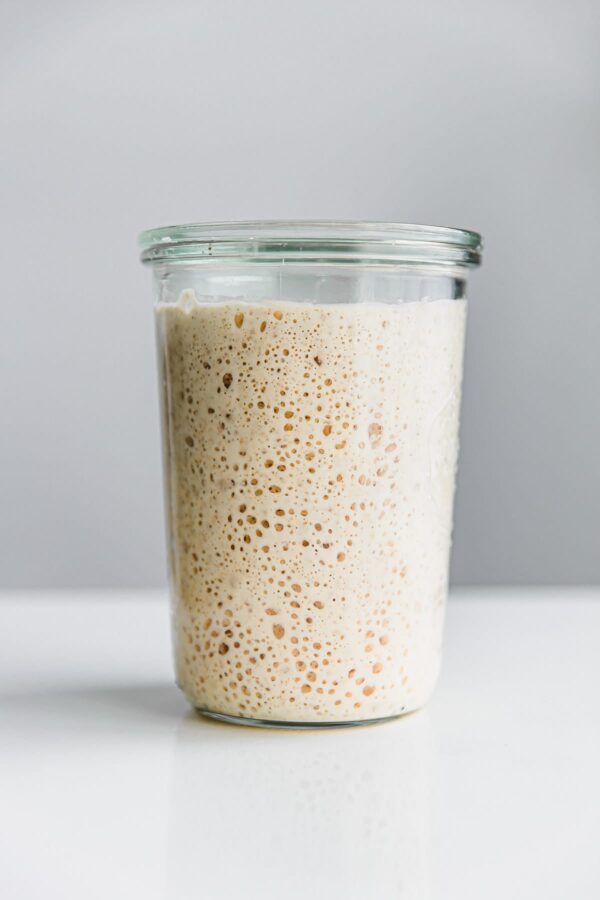
Many people are creating sourdough starters and exploring sourdough for the first time. It’s exciting to see people diving into a subject that I’m so passionate about!
Over the past month, I’ve received many questions on sourdough starters. To create a helpful and easily referenced resource, I’ve put together an extensive Sourdough Starter Troubleshooting Guide below.
If you’ve already established a strong sourdough starter and are experiencing troubleshooting issues related to bread baking, please check out my Sourdough Bread Troubleshooting Guide.
Here you’ll find answers to the following questions and much more:
- How do I get started?
- How can I reduce sourdough discard and waste?
- What flour should I feed my starter? What is a feeding ratio?
- Why isn’t my starter more active? Should I start over? When can I start baking with it?
Note: If you have additional questions not addressed, please leave them in the comment section.
Skip to Various Sections:
Basics + FAQ Maintenance Baking Troubleshooting
Sourdough Starter FAQ:
Q: How do I get started?
A sourdough starter is a culture of naturally occurring wild yeast and lactic acid bacteria used to make naturally leavened, fermented bread. Sourdough starters are active organisms that require regular feedings for best results.
If you’re new to sourdough baking and interested in creating a starter from scratch, I recommend checking out this list of my favorite sourdough resources and tools before getting started.
While I don’t have a sourdough starter recipe, I recommend The Perfect Loaf’s starter guide or Baker Bettie’s starter guide. Be patient as it can take up at least 2 weeks (or longer) to build an active, strong sourdough starter ready for bread baking.
Q: Do I really need a kitchen scale?
Yes. This is less of a deal-breaker for creating a starter, but vital for bread baking if you’re looking to achieve consistent results.
Volume measurements are wildly inaccurate (on that note, be sure to learn how to measure flour properly!) and will not yield consistent results for sourdough baking. I recommend this basic scale, but any accurate scale with 1-gram increments will work.
Q: Where are your starter jars from?
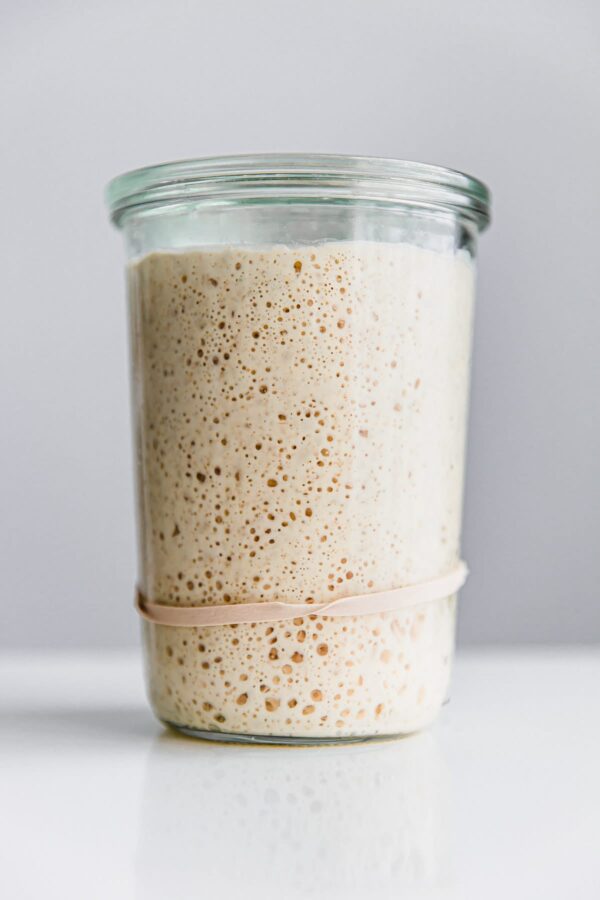
I’ve found Weck jars to be perfect because they’re straight-sided. This makes them easy to clean and offers a visual clue as to your starter’s activity level.
If you would prefer to use something else, choose a container that meets the following criteria: 1) easy-to-clean, 2) glass, 3) includes a lid, which can be set askew or is not airtight, 4) is appropriately sized and allows your starter to grow at least 3-4x in volume.
Q: Do I have to discard sourdough starter? How can I reduce flour waste?
Yes! Discarding part of the starter is required to maintain a healthy sourdough starter. This actually reduces waste, as it means your starter remains small and requires less flour during feedings. Also, please remember that homemade bread is less wasteful and less resource-intensive than packaged store-bought bread.
When I’m not baking bread, I scale down my starter. If I do plan on making bread, I simply scale it up during the previous night’s feeding (same feeding ratios, just larger quantities) before preparing sourdough bread or sourdough pizza dough the next morning. Please remember that you can always scale a starter up or down; the volume of your starter does not have an impact on its strength.
The best way to reduce the amount of sourdough discard during each feeding is to maintain a small starter or use the discard in sourdough discard recipes or for bread baking. You can also compost discard or gift dry sourdough starter to friends.
Note: If you want to use the discard, but don’t want to bake every day, you can compile the discard into one jar at each feeding and store this in the refrigerator. You’ll need to bring it back to room temperature (wake it up!) or give it additional feedings, depending on what you are using it for.
Q: Why do some starter guides call for different types of flours?
Methods will vary depending on a baker’s preference and experience. While you can make a sourdough starter with many flour types (do not use bleached flour for any bread baking), whole grain flours will generally yield faster results.
Rye flour is one of the best, as it is higher in nutrients than other whole grain flours. Extra nutrients will often speed up the process. If you don’t have access to rye flour, organic whole wheat flour is the next best option. Most starter guides will transition flour types and instruct you to change feeding ratios as it builds strength.
Whole grain flours contain the germ and endosperm, which become rancid if stored for extended periods at room temperature. Make sure your flour isn’t spoiled before starting.
Q: What kind of flour should I feed my starter?
Sourdough starters can be made and maintained with many different types of flours. All sourdough starters will behave differently, but different flours will yield different characteristics and flavor profiles.
Once your starter is active, I generally recommend feeding it with the type of flour that you will most often bake with. Therefore, if you’re making mostly whole grain bread, you might want to maintain a whole wheat (or predominantly whole grain) starter.
If you plan on baking with bread flour, you might want to slowly transition it to bread flour or unbleached all purpose flour over time. See more on transitioning to different flour types below.
Q: Can I make a gluten free sourdough starter?
Yes, this is possible! Gluten free starters behave extremely differently and require a completely different baking approach. There are various flour options you can try, so you’ll need to do more research to figure out what is best for you.
I am not experienced with gluten-free sourdough baking, but there are great resources (Vanilla and Bean, as well as King Arthur Flour) out there if you’re interested.
Q: Can I use packaged yeast in my starter?
No! Sourdough starters are cultures of wild yeast/lactic acid bacteria. You cannot jumpstart or create an a sourdough starter from commercial or dried yeast. It sort of defeats the point.
Q: What is a 100% hydration starter? What does that mean?
Hydration refers to water (or other liquids) quantity relative to total weight (grams) of flour. A 100% hydration sourdough starter is fed and maintained with equal parts flour and water by weight. Most sourdough bread recipes call for and use this type of starter.
Starter Maintenance Questions;
Q: Can I switch or transition flour types over time?
If your starter is brand new, I don’t recommend constantly switching your flours (type or brand) as this will impact its activity and can create confusion if you’re looking to establish a solid feeding schedule.
However, if your starter is active and mature, you can change flour type as desired or needed. I recommend transitioning the flours slowly over the course of a week. Remember that flours behave differently and you may need to adjust your feeding schedule.
Q: How do I scale my starter up or down for baking or other reasons?
Simple increase or decrease the quantities in your next feeding using the same feeding ratio (see explanation below) to maintain your current schedule. Example:
Current Starter Feeding: 20 grams starter: 100 grams flour: 100 grams water (1:5:5 ratio)
Scaled Down Starter: 5 grams starter: 25 grams flour: 25 grams water (1:5:5 ratio)
Scaled Up Starter: 40 grams starter: 200 grams flour: 200 grams water (1:5:5 ratio)
Q: Can I preserve my sourdough starter in case something happens? What’s the best way to gift it to other people?
For long term storage, I recommend keeping dried sourdough starter on hand. Follow this guide on how to dry sourdough starter. Great for an emergency back-up or for gifting to friends and family.
Q: Can I refrigerate my starter if I don’t bake frequently?
Yes. If you don’t bake frequently or are going out of town, you can refrigerate a healthy sourdough starter for long period of time. Cold temperatures slow yeast and bacteria activity and will naturally extend how long your starter can sit between feedings.
I don’t recommend continuous refrigeration as it can change the balance of wild yeast/lactic acid bacteria and yield inconsistent results. However, it’s a great option for short-term breaks!
Before refrigerating your sourdough starter, discard a portion and give it a regular feeding. Allow the mixture to sit at room temperature for roughly 1 hour before transferring it to the fridge.
Once you are ready to resume regular feedings or bake with your starter, remove it from the refrigerator and allow it to sit at room temperature (ideally between 74°F-78°F) until it is bubbly and has reached peak activity. Continue with regular feedings and observe its activity.
Depending on how long it has been refrigerated, a refrigerated sourdough starter may require an additional 2 to 3 regular feedings at room temperature before it has resumed regular activity levels and is strong enough for baking sourdough bread or sourdough pizza.
Q: What do you mean by feeding ratio? Which feeding ratio should I use?
Feeding ratios are used to indicate the ratio of sourdough starter, flour, and water in each feeding. Here are a few examples:
1:1:1 ratio = equal amounts of sourdough starter, total flour, and total water by weight. [Eg. 20 grams sourdough starter: 20 grams flour: 20 grams water].
1:2:2 ratio = [Eg. 20 grams sourdough starter: 40 grams flour: 40 grams water]
1:5:5 ratio [Eg. 20 grams sourdough starter: 100 grams flour: 100 grams water]
*Most sourdough starter guides begin with a 1:1:1 ratio. As your starter becomes more active (more wild yeast/lactic acid bacteria), you will change your feeding ratio to account for the increased activity level.
Once your starter is active and on a reliable feeding schedule, you can adapt your feeding ratio as needed to adjust baking timelines, etc.
Sourdough Starter Baking Questions
Q: How do I know when my starter is ready for bread baking?
Before baking, your sourdough starter should rise predictably and be on a reliable, consistent feeding schedule. If your starter is struggling to rise between feedings or taking a significantly long period to reach peak activity, it is most likely not strong enough to leaven bread.
This might vary depending on the type of flour you’re using, but your starter should at least double in volume (or more) at peak activity and pass the float test.
My current feeding and starter activity: My two-year-old starter is currently fed King Arthur unbleached bread flour. Using a 1:5:5 ratio, my starter peaks in about 10-12 hours when held at a temperature of roughly 75F.
Q: Do I have to use my starter at peak activity? Can it be used early or late?
Once your starter is active, you can play with these elements to introduce different flavor profiles into your bread. Younger starters will have a more delicate, sweet flavor. Peaked, slightly fallen starters are higher in acetic acid and will contribute more sourness/tanginess to your loaf.
I prefer to use my sourdough starter at peak activity and when it is just beginning to fall, as this has yielded the best results for me. Remember that changing these variables will impact your dough and bulk fermentation times.
Sourdough Starter Troubleshooting
Q: My starter is developing mold. How do I know if my sourdough starter is bad?
If your starter is developing any mold (pink, etc.), throw it out immediately. There is no way to fix or salvage a moldy starter. Check your flours (are they rancid? spoiling?) before starting over.
Q: My starter isn’t showing any signs of activity and it has been several days. Did I kill my sourdough starter?
Be patient and try placing it in a warmer area of your home (76F-80F is ideal). Use your nose as a guide, as it a better tool than visual activity in the beginning. Use recipes as guidelines, not strict timelines. If your starter peaks in activity, feed it. If it sluggish, wait and give it more time.
Many guides indicate that your sourdough starter should be active and ready for baking within less than a week. This is best case scenario and is not common. Many starters take up to 2 weeks or longer to become active enough to use in bread.
Q: My starter was really active on day 2 and 3, and then there was zero activity. What is happening?
It is common for a sourdough starter to have a surge in activity those first few days and then die down. This is normal and the results of another type of bacteria build up, not an indication that your starter is dead.
It will pick up again with time and the right types of bacteria (wild yeast/lactic acid) will increase and become more stable.
Q: My starter is active, but is barely rising between feedings. What do I do?
Stay the course, be patient, and continue with regular feedings until it strengthens. If you’re using a smaller ratio of sourdough starter in your feedings, consider increasing it until the starter gains more strength.
If your starter is not doubling or growing substantially in volume between feedings, it is not strong enough to leaven dough. You can certainly try baking, but you most likely will not achieve proper fermentation.
Q: Why isn’t my starter passing the float test?
Float tests are not fool-proof, but are generally reliable for 100% hydration sourdough starters (starters that are fed equal portions of flour and water). Failed float tests generally indicate the following:
- Your sourdough starter is too young and not strong enough for bread baking.
- The starter is strong and active, but not quite ready. Allow the starter to sit at temperature for another 30 minutes or hour and test again.
Q: My ambient kitchen is very cold. What can I do?
Wild yeast prefers warmer temperatures. If you’re dealing with cooler temperatures, your sourdough starter will take longer to develop, require more time to peak between feedings, and your bulk fermentation time for bread baking will be extended considerably. This isn’t a deal-breaker, but something to be aware of.
You can try storing your starter in an oven with the light on (please use an ambient thermometer to keep an eye on the temperature as some ovens can easily become too hot). You can also try placing your starter container in a microwave next to a warm bowl of water.
If you’re serious about bread baking and struggling with temperature regulation, I highly recommend a bread proofing box (I own this Brod & Taylor one and love it).
If you enjoyed this post, be sure to check out my other sourdough bread baking resources:
177 Comments on “Sourdough Starter Troubleshooting Guide and FAQ”
Hi,thank you so much for this post. Really interesting. I created my own starter at thé beginning of january and since 15th it was really active everyday bubbling and double or triple at 1.1.1 in 4 h. After i followed some advices to put it in the fridge. I wasnt sure about that and decided it was a wrong Idea (my breads were flat and it seems to not like it a lot) and put it back in my kitchen. Since that my starter seems weak, take a longer time to rise after feedings , not a lot of bubbles as before…. Do you have any advice ? I havent tried to make bread because since the fridge they were flat and I want to wait my starter to be in a better shape.
Try substituting some of the flour with rye flour and keeping it out at room temperature, warmer if possible! Keep up regular feedings and it will probably pick up. Sometimes it takes some time for it to get back to its regular schedule/activity after a fridge rest, and it sounds like you transferred a new starter to the fridge quite early (which I don’t recommend), so keep I would wait until its very active and you’re regularly baking with it before trying that again.
so i was out of my house all day and accidentally forgot to feed my starter before i left. it’s been about 35-36 hours since i last fed it. do i start all over again? did i miss the feeding window so much that it’s ruined?
Absolutely not. Just feed it now and continue, it might need a few more feedings to get back on track! Never toss a starter unless it’s growing mold.
Hi, I’ve just established a starter . I am using weck jars for sourdough starter- found you on their Instagram . I am seeing conflicting info on using seal on established starter or discard jar in fridge? Also I continually get condensation in my starter jar with just glass lid even discard jar in fridge- is this normal ?
Hi – so glad you discovered my site. I have a lot of sourdough resources that you can find on this page.
You do not want to use the seal for sourdough discard – it should never be airtight as gases could build up. I have never used more than just the glass lid on Weck jars, or you’d want to cover lightly with another lid, if you’re using another type of jar. Condensation will happen in the fridge, it’s most likely because of the temperature/humidity differential between the contents of the jar and the fridge environment. Don’t worry about it, it’s very normal!
I am on day 14 with my whole wheat starter and still no rise. I am doing 1 cup each of flour, starter and bottled lukewarm water 2xs a day.
Any suggestions?
Hi Rebecca. It’s really hard to say. What temperature is the starter being kept at? Your room might be too cool. It also sounds like you’re over feeding a sluggish starter, so I would only feed it at most 1x a day until you start to see some activity, otherwise you’re diluting any good bacteria that’s developing in there each time. I might also switch to a bread flour + rye flour combination, as I have more success with that.
Hi, I followed The Clever Carrot’s starter instructions and it was beautiful and active and growing by day 7. I continued to feed it for another few days then popped it in the fridge bc I wasn’t sure when I was going to use it. 4 days later I took it out, discarded half, and fed with the same amounts I had been using before (60g each water and flour). It is still bubbly and smells good but it just won’t double. I’ve been keeping it in 75-80degree temps and still won’t grow. What have I done wrong? Is this salvageable? Many thanks in advance.
My starter was active and healthy until our new HVAC system was installed. Since then I’ve attempted to create a new starter from scratch. I tried both white and whole wheat flours although the whole wheat is maybe 1 year old. Some bubbles appear on the surface but there’s no rise. I purchased a proofing box but the results have been about the same. The house temp is 21-22C and humidity 50%. I appreciate any help that you can provide.
Sorry for the late reply! I would personally use a combination of bread flour and rye flour, as I’ve had the most success with that combination when starting one. Did you throw out the last one? It might have slowed down, but it shouldn’t have died. I would personally not throw it out and try to work with what you had. The proofing box should eliminate any issues that cool temperatures from the HVAC are causing – keep it around 76F when you’re getting the starter going and you shouldn’t have any issues.
Help! 22 day starter from scratch.
I’m currently doing
30g starter, 30 ww flour 30 Unbleached ap flour 60 water.
It’s doubled a few times now, only once under 6 hours. Is it not riding so high because I have whole wheat flour? I read all purpose helps for a higher rise.
I’m following King aurther starter recipe.. I ended up adding ww flour back in to my starter because I thought it would like the boost.
Should I have more starter each time? I was following their 113g 1:1:1 ratio but since it’s takin sooo long that’s just a lot of flour it feels like to be burning through.
I keep it in mid-high 70s in house.
Filtered water
It has passed a float test so I used it, and my dough didn’t rise what so ever while proofing. So I don’t think it’s anywhere near ready.
Thank you for this information! If you have a cup of starter in a jar, should you double it in feeding or give it smaller amounts?
Hi Ann,
The amount of starter you have doesn’t impact how you choose to feed it – if you keep doubling it, it will grow to an enormous size and you’ll essentially just keep wasting flour during feeds. You ideally want to reduce discard, unless you use a LOT of discard every single day. I usually keep a very small amount of starter on hand for basic feedings (5-10 grams starter; 30 grams flour; 30 grams water) and then scale it up before I use it for baking.
I did the float test and it floats, but then after a minute or two sinks. Is it ready?
Hi Keri, eventually it will sink! How old is your starter? It sounds like you should try baking, but I’d need more details as the float test isn’t absolute or foolproof, just a helpful guide.
Hi, first thank you so much for the great information. The way you’ve explained sourdough starters has helped me understand the process so much better!
I have a starter that I purchased dehydrated and have been nurturing for a few weeks now. I have it where it’s consistently doubling/peaking around 12 hours with a 1:3:3 ratio. My issue is that no matter what, it never ever passes the float test, even when it’s at peak. It sinks like a rock every time. I haven’t tried making bread with it yet for this reason. I’ve tried in the past & failed miserably, so I’m hesitant to waste my time & ingredients if it’s not passing the float test.
Do you have any ideas what could be wrong? It looks great otherwise, very bubbly & rising. I’m using an unbleached whole grain bread flour. Any feedback would be great!
Hi Nancy! Glad that you’ve found this guide helpful. So while the float test can be helpful, it’s definitely not a fail safe way to test the ‘strength’ of a starter, especially if you’re using a whole grain flour for feeding. Whole grains will have the germ and endosperm present, so essentially they’ll be a bit denser and that could explain why it isn’t floating.
I’d say that if your starter is doubling in that time, it’s worth trying to bake! If you’re still nervous, I would switch to a combination of unbleached bread and rye flour for feeding (80/20 ratio) and see if it makes a difference. 100% whole grain starters can be more challenging to judge, so it might give you a bit more confidence as you’re getting started.
Hello, I’ve made several batches of the sourdough bread and the last 4 have been difficult to use the lame to score the bread. When I use the lame it drags and pulls the dough.
Any suggestions? Thanks
Hi Pattie! It’s hard to troubleshoot sourdough without a lot of details. Has anything changed? Ambient temperature? Other things you’ve noticed? Sometimes this can happen when your dough is slightly overproofed. Also, sometimes you just need to replace the blade on the lame, but I have a feeling that isn’t the culprit here.
My starter is a hundred yrs old and kept on the counter. When I feed it it will have a ton of bubbles in a couple of days, but it will not rise. No matter what I do it will NEVER double in size. Please HELP!!!
Hi Deena, I’m not sure. It could be that you’re over feeding it or there are some other issues present. Feel free to send me an email with more details and I might be able to troubleshoot better.
Hey Laura,
Great advice. i have tried in the past to get sourdough starter going. i guess being in a rush is sure to be a failure. I will be more patient this time. can’t wait to make my anchovy pizza . fantastic
best regards
Hi Laura – I’m struggling with my sourdough. My starter seemed strong enough? Doubling every 8-10 hours for about a week before I attempted to make my bread. I used a miche recipe that started with a pretty dense levain that didn’t quite double over night but I could see some activity so I soldiered on. Needless to say, the dough really didn’t rise much. Any thoughts on if it was the starter being too weak still or if I somehow just messed up starting with my levain? So terribly frustrating! Thanks.
Hi Linda – happy to offer some assistance! New sourdough starters can often be frustrating, so it requires some patience for sure to get to the point where you’re starting to get consistent and good results from bakes. I would personally try a simpler recipe that uses an 100% hydration levain. I also wonder if you’re dealing with super cool temperatures in your kitchen? At this time of year, that can be very common.
Have you tried my artisan sourdough recipe? https://www.abeautifulplate.com/artisan-sourdough-bread-recipe/ It’s hard for me to provide a ton of guidance for other recipes because I just don’t know enough details to be helpful (and a lot is visual too). I have a YouTube step by step video for that recipe as well. I would recommend trying that out and seeing if you have more success? It sounds like your starter is strong enough, but there might be some other issues at play. How old is it?
Hi Laura: I can’t find much information on my issue online anywhere, so I thought I would ask you. Perhaps others may find the info useful too.
I live in a climate with hot summers. Ambient kitchen/house temperature often 28-32 degrees Celsius (82.4 to 89.6 Fahrenheit).
The recommended proving cabinets don’t provide cooling effect, they only heat, and I don’t need any more heat.
The refrigerator is too cold to age a starter (4 C / 39 F), and my only other option is a wine refrigerator at 18 Celsius (64.4 F).
As you may expect, I am struggling with getting the starter to become active. In the wine fridge, it does create bubbles and is active but never doubles in size. I feed it once a day 1:1:1, (baker’s flour 12% protein). It’s not strong enough to bake.
In ambient kitchen temperatures (I split it in two, to try different environments), the starter still doesn’t rise double (I feed that one twice a day), and in fact, smells quite funky and I think I need to chuck that one out.
Any ideas to supercharge the wine fridge starter so I can bake? Thank you
Hi Evan! Hmm, so that is definitely a predicament. It will be very hard to build a strong new starter if you’re using a refrigerator (or super cool temperatures, like a wine fridge). In that case, you’d be better off controlling the ambient temperature and using super cold water or ice water for feedings – then eventually transitioning to storing in the fridge between bakes. That should help control it a bit even if the ambient temp is high. You could find some sort of reusable freezer pack and cooler, and storing your starter in that on your countertop? Trying to think of ways for you to keep the temperature lower than ambient, but not quite as cold as the fridge.
If you aren’t, I would also recommend using a whole grain flour, such as rye, for a portion of the flours in your feedings (80/20; high protein bread flour + rye). That would also make a difference in activity level. Hope this helps in some way!
I started making starter. After 24 hrs i fed it with equal flour and water as there were bubbles already. It started rising 2 hrs after. After 12 hrs I noticed that it already has rises to more than double and then fell to base line. Should i wait for 24 hes to complete before feeding or should i feed after 12 hrs from day 3???
Always feed at peak activity, not when it falls (that’s a sign it’s been out of food for a while). But activity in the first few days of creating a starter is deceptive and not the same thing, I’d hold off and see how it goes in the next few days.
Hello! My starter is over a month old. I use organic unbleached AP flour & spring water. I keep the jar between 70-80° with a seed heating pad near but not touching the jar. I feed it roughly every 12 hours. I had been doing a 1:1:1 ratio always discarding, but recently have tried 1:2:2 and even tried a feed just adding flour (advice found online for a sluggish starter). The starter has doubled exactly ONCE in the past month. Otherwise, it bubbles and rises but maybe by a third in volume.
Any advice for what I can try and get this more active?
Hi Jen! It’s hard to say because so many factors are involved. Ideally, the starter would be held around 72-76 degrees Fahrenheit, but it sounds like you have that on track. I would try feeding less, especially if it is not rising much, and also incorporating rye flour into your feedings. Some whole grain flours – especially rye – contain more nutrients that help young starters get more active. Try this and see if it helps!
It has been 24 hours and my starter jar has condensation. I love in a warm humid climate. Any suggestions?
It’s been about three weeks and my sourdough starter has only risen half of its size. I feed it a 1:4:4 ratio with 50% wholemeal flour and 50% ap flour. What should I do to make it double in size? Is it strong enough to bake bread?
Hi Max! Sometimes starters can take a while to get going. I would recommend switching to a combination of bread flour (AP can work too) and rye flour, and maybe switching to a 80/20 ratio of those. Keep that up for another week and see how it’s doing! You might also want to play around with using slightly warmer water or trying to find a warmer spot in your house where it can sit in between feedings. Hope this helps!
After seven days my starter is creamy and no bubbles, shall I continue to feed it more days?
Starters can take up to 2-3 weeks to become reliable and active. Definitely give it more time but try feeding it slightly less often or introducing some rye flour to get it going! I don’t know what recipe or technique you used to create it, so extra details would help me troubleshoot more.
Hello Laura,
When you say “feeding the starter less often”, what does it really mean? Can you please give an example?
Not sure exactly what portion of the guide you’re referring to, but if you’re struggling to grow a starter and it’s not doing anything for a while – don’t feed it every 12 hours, give it more time (maybe closer to 24 hours), as sometimes you can be diluting any activity with too many feedings. Hope this helps.
I have been feeding my starter for six weeks now and it’s barely rising. I started it from scratch. Is it dead? I’ve done a starter from scratch before that took only three weeks so I’m confused. Some days it will rise but not double and other days there is zero activity.
I would recommend playing with temperature (either ambient – where it’s held – or using slightly warmer water). Unfortunately I can’t give much advice or specifics because you didn’t provide any details, but using a portion of rye or whole grain flour in your feeds should also help.